Let's Talk About Separation Anxiety
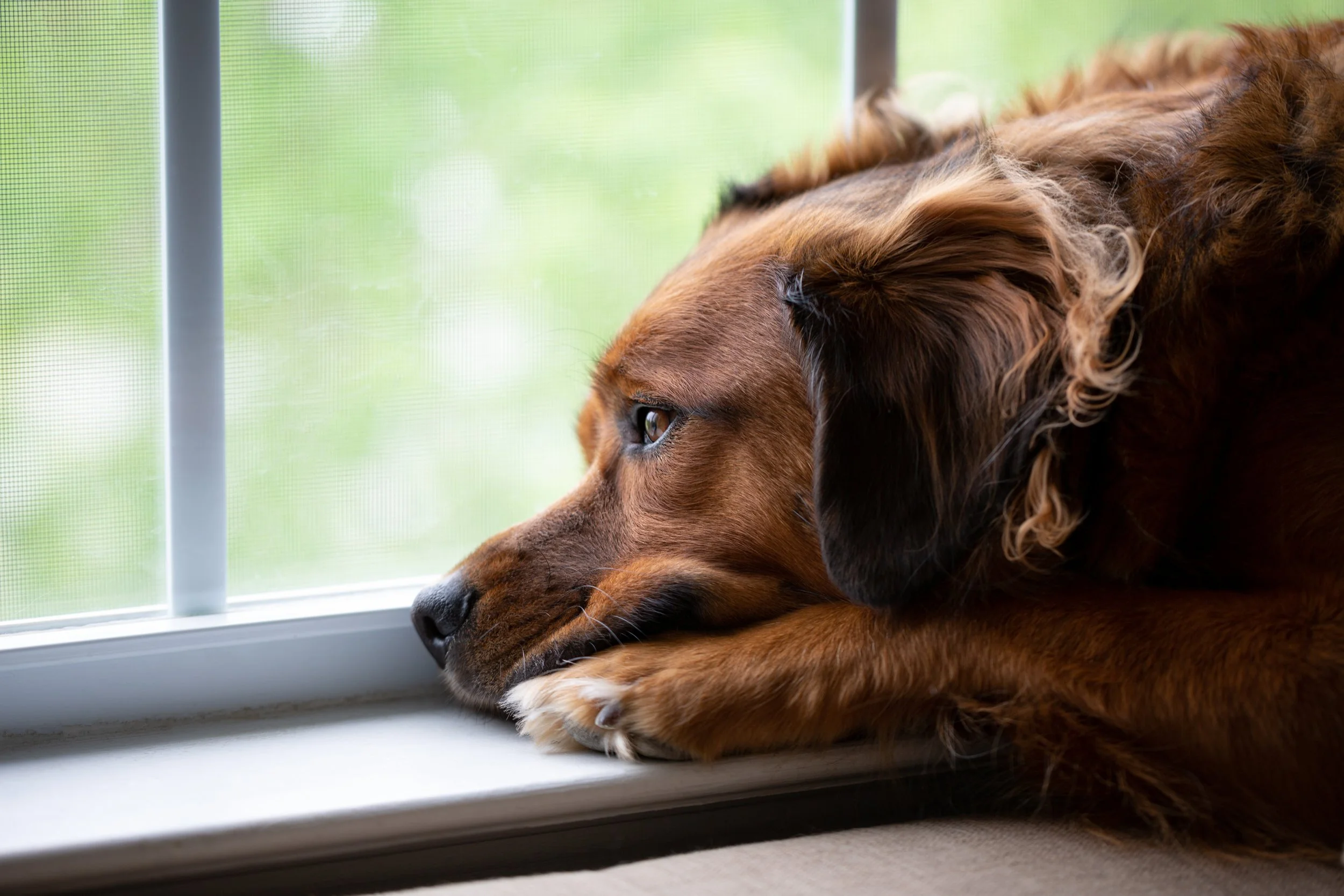
sauceyphotos/stock.adobe.com
A friend and experienced dog person recently asked me for resources to help people who have dogs with separation anxiety. As I sat down this morning, I realized there might be other people who could use this information now or in the future, so I’m writing down my thoughts here.
First, some background and the disclaimers:
Separation Anxiety is technically a medical diagnosis. And I’m absolutely not qualified to make a diagnosis - I’m not a licensed veterinarian and I try VERY hard not to offer medical advice. I’m even reluctant to share an opinion about the weight of a client dog most of the time and encourage to talk to their trusted veterinarian about anything medical. Knowing there’s often a connection between what we see as “behavior problems” and medical issues, I often encourage people to get their dogs in for a full physical early in our conversations about training.
But just as it’s true that I’ll work with a dog who hasn’t yet been to the vet for such a checkup, I’ll help people with dogs who struggle with being left alone even if they don’t have an official diagnosis. In the end, if we can help the dog learn that being alone is no big deal so they can be comfortable when their people leave, I suppose the diagnosis is a bit less important than the results. So, we base our decision about moving forward with training on the dog’s behavior and body language when left alone.
Dogs are social creatures and, hopefully, we’ll build a trusting relationship with them and they’ll want to be with us. That might result in dogs who follow us around to see what interesting thing will happen next. “Maybe there will be play! Maybe there will even be treats! I’d better to follow him just in case!” I joke that I’ve not gone to the bathroom alone in 13 years. But that’s not because of separation anxiety, it’s because our dogs like us and want to be with us. We call this FOMO - Fear Of Missing Out. These dogs may be disappointed when we leave since they’d like to go along - but they don’t panic. And that’s where we draw the line.
Our dogs, Juno and Joker, are like that. They follow me to the garage door hoping that they’ll get permission to come along with whatever adventure I’m about to take. If I can’t take them with me and leave them behind, they are disappointed. And sometimes they’re even vocal about that disappointment. Juno will howl and Joker might join in (howling is something we also do for fun together - so it’s not an unusual choice for her to express her feelings). But it’s brief. Within a minute or two, they are no longer at the garage door and no longer howling. They’ve moved on to do normal doggie things. They might head outside to sunbathe or chase lizards, or go get a drink of water, or dig out the chew stick they hid yesterday, or take a nap in one of the many comfy beds. And it’s that ability to quickly move on from the disappointment that convinced me years ago that they aren’t suffering from separation anxiety - they just have FOMO.
Some dogs even party when their people leave and engage in behaviors they know they won’t “get away with” when people are home. Some raid the trash. Some counter surf. Some toss throw pillows around. A few I’ve worked with chose to dismantle the tv remotes by throwing them around the room. While destruction of things CAN be a sign of separation anxiety, these dogs weren’t panicking - they were having a blast. Those problems require some management changes but not a separation anxiety protocol.
How do you tell if it’s something to worry about?
So, how do you know if this is likely separation anxiety and worthy of addressing? I suggest doing a little detective work. First, grab a camera: we all have one in our pocket or on our nightstand - a tablet or phone will work well for this. Position it so you can see your exit door and as much of the house around it as possible. Turn on Facetime (or the Android equivalent) or Zoom with another phone and head out. You don’t need to go far or for too long. Walk out of sight of the windows of your house/apartment so the dog truly believes you’ve left - and watch the dog on the screen.
We’re looking for more than mild disappointment. So, if a dog whines for a moment or barks a few times but then leaves to go play, we’re probably fine. If they scratch on the door ONCE but then seem to shrug and go take a nap, I wouldn’t worry.
But if the dog is really trying to get out of the door (or window) to get to you, scratching, digging, biting on the door/window trim/curtains/blinds, causing damage to the door, frame, floor, nearby items (including furniture), it’s a red flag and you should come inside. Additionally, even if the behavior seems relatively benign, but is extended for more than a few minutes, there might be a real problem here. So, minor whimpering or wandering around might not seem like a big deal but if the dog can’t settle for thirty minutes or two hours, I’d want to dig deeper. A dog who barks for 45 minutes but then settles isn’t okay - they’ve simply exhausted themselves and stopped only to recover.
The things we watch for include:
The inability to settle *
Vocalizations (barking, crying, howling, etc.) *
Escape attempts
Indoor urination with a solidly-housetrained dog
Refusal of food and water when alone
Drool, vomit, diarrhea, shaking, panting when left alone
* for extended periods as described above
Of course, every dog is an individual and signs of separation anxiety can differ quite a lot with different dogs. If you’re uncomfortable about doing this sort of assessment alone or you tried but don’t know how to interpret the behavior, contact a trainer who can do the assessment with you.
What if i think it’s separation anxiety?
Don’t despair. While some dogs can take a long time to get better, most dogs do get better with some structured training help. This involves ensuring the dog is never left alone longer than they can comfortably handle (possibly requiring help from friends, dog sitters, daycare, etc.) and systematically leaving them alone the amount of time they CAN handle, then slowly increasing the duration of those absences as the dog gains confidence about being alone. There are dog trainers specifically trained to help people with this training to ensure you’re moving along as quickly as possible, but not too fast (which will often result in a worsening of the problem). And there are “do it yourself” options too so you might not need to hire a professional. While the training needs to happen several times a week, it’s usually not very difficult to actually DO the training and doesn’t usually take very much time out of our already busy lives. Most dogs don’t seem to simply outgrow true separation anxiety, so ignoring the problem isn’t likely to work. If you think this really is separation anxiety that you’re seeing, check out the resources found below.
Are there ways to avoid Separation Anxiety?
Since we don’t fully understand the causes for this, it’s hard to give prescriptive steps to avoid it. We suspect that there’s a genetic component, but there’s nothing we can do about the genetics of the dog standing in front of us - so we train. We do seem to see a correlation between alone time distress and dogs who were flown alone for long distances to new homes as puppies (I’d never risk having a breeder fly a young dog to me - I’d drive cross country to pick up my puppy instead). But here’s a general thought to help avoid this type of problem - practice.
Whether this was a new puppy or a newly-adopted adult, after getting the dog comfortable with our house/family, I’d make sure the dog had a chance to be alone briefly. Of course, I’d be sure the dog AND the house (and any other animals in the house) were safe first. So that might mean using baby gates, or a playpen, or even a crate if the dog was already entirely comfortable with a crate (see more below on crates). I’d keep it short and sweet and make no big deal about it. It might just be walking to the curb to get the mail. Or going out to get something out of my car. Or, if I didn’t have a legitimate need to leave, I’d make up one and walk the distance of just a few houses down the street before coming back. I like to tell our dogs when I’m leaving and I like to greet them when I get back - but it’s all rather low-key (hopefully sending the message that my leaving is no big deal). Joker always goes to get me a toy and we play tug for 15 seconds when I return from nearly any trip, but we do that periodically throughout the day too - I don’t want Joker waiting anxiously for my return even though it’s entirely okay for him to be happy that I’m back.
And I’d increase the duration somewhat randomly. This haphazard training approach is what naturally happens to most dogs and most dogs handle it just fine. They learn that, “well, they sometimes leave and it’s sometimes really brief and other times it’s longer but it’s just part of life and it’s no big deal.” Look around when you get back to see any signs of trouble: damage to a door/doorframe, pee on the floor, or a dog that’s still barking as you approach the house again might be indications to look more closely.
And that’s when I’d set up a camera to watch while I was gone (a second-best option to watching live with a second device is to simply set up a camera and record what’s going on for review after you get back). If you see concerning things, cut the outing short and come back inside to figure out next steps (shorter absences or embarking on more systematic training).
But in any case, I’d get started. Being comfortable alone is a skill. And skills that aren’t used regularly get rusty. So even dogs who are fine when alone need practice actually being alone from time to time. Go for a walk without your dog!
Okay, I think I have a problem - what do I do?
If you think your dog is actually struggling when left alone, consider getting help. There are three option I feel comfortable recommending:
For people who prefer to “do it yourself” or would like to explore the least expensive option (there’s nothing wrong with that!), consider the book Separation Anxiety in Dogs: Next Generation Treatment Protocols and Practices by Malena DeMartini. It’s the “gold standard” in books on the subject and it teaches you how to establish your dog’s current comfort threshold and how to systematically increase it. It’s a great choice for the price, but it’s a book - so you can’t ask it questions. It’s available wherever you buy books.
For a slightly more expensive option that comes with more support, consider Malena’s online course called Mission Possible. This online course teaches you through slides and videos just what to look for and just what to do - and you CAN ask questions about the process along the way. While Malena may not be able to answer questions that are specific to your dog, she can address questions about the protocol. (So, she could explain why we don’t do the work seven days a week but probably couldn’t tell you why your dog is progressing nicely on every day except Tuesdays.) At the time I’m writing this, the course is $199 once - then you can use it as long as you need to for no additional cost.
Quick aside and full disclosure: Malena is both a mentor and a friend. But I’m recommending her options because I believe in them and not out of loyalty. Additionally, I choose not to participate in any sort of referral fee programs - I want you to know that I’m recommending things because I believe in them and not because I have a financial interest in doing so.
The third option I’d recommend is hiring a Certified Separation Anxiety Trainer (CSAT). There are hundreds of us now found worldwide and we’ve helped thousands of dogs and their human families. This work is almost ALWAYS conducted via camera, so it doesn’t matter when your trainer is physically located. If you want to consider working with me, click on the “Contact Me” link at the top of the screen. And to find the most updated list of all CSATs, CLICK HERE.
Anything else to consider?
Crates
While often recommended online, most professionals don’t suggest using crates as part of separation anxiety training. Anecdotally, I’ve seen dogs progress MUCH FASTER outside their crates than inside. I understand concerns about safety (of your dog and your home) and there are ideas for ensuring both are addressed using other options. Dogs with separation anxiety often injure themselves - sometimes quite seriously - when left alone in a crate. A strong, “escape proof” or “safer” crate in this situation is animal cruelty - don’t fall for the marketing hype of some crate manufacturers. (That’s not to say I don’t like their crates - just not for this use.)
How about medicine?
Remember where I started? I’m not a vet? So I’ll try to be very careful here to stay in my lane. Some dogs absolutely benefit from the use of medicine as a support to training. Most behavior-savvy vets don’t see medicine as a solution but an aid and many will require information about your training plans in order to prescribe the medicine. Different vets seem to have different preferences about which of the many options to turn to first. It’s been my experience (with client dogs) that a change in medicine or in dosage may be required to find the right medicine (or combination of medicines) to help any given dog. Side effects are typically minor and temporary. Dogs who are on the “right” medicine often look like they aren’t on any at all - they aren’t stumbling, sleeping all the time, are eating, playing, engaging happily - they simply progress faster with things that used to be scary. So, talk to your behavior vet (or find one with that education and experience). Keep an open mind. Keep a journal about what’s working and what isn’t. Communicate with your vet as needed.
Are there other options?
I’m always encouraged by ongoing study of a problem. And there is enough interest in separation anxiety that it gets some attention and funding for research. One day, we might have a magic bullet for this. We might be able to teach our dogs to be comfortable when alone using machines with AI. Future methods might include the use of food. Maybe things will be more effective and efficient than what we can do now. But, as of right now, there’s just no compelling evidence that other options work. There ARE studies that say otherwise - but they are all, in my opinion, flawed enough not to switch gears on this just yet. I’ll keep my eyes on the research though and write about advances to what we know when we find out more.
Conclusion
Wow! You got all the way through all that? Congrats! I hope you found it helpful. Separation Anxiety affects hundreds of thousands of dogs (between 22-55% of all pet dogs according to one study). But help is available. As with all behavior issues, there’s never a guarantee that your dog can be “cured” - but the vast majority of dogs can be helped enough that you can live a happy life together. If you have questions, feel free to ask them below or reach out to me and I’ll get back to you as soon as possible.